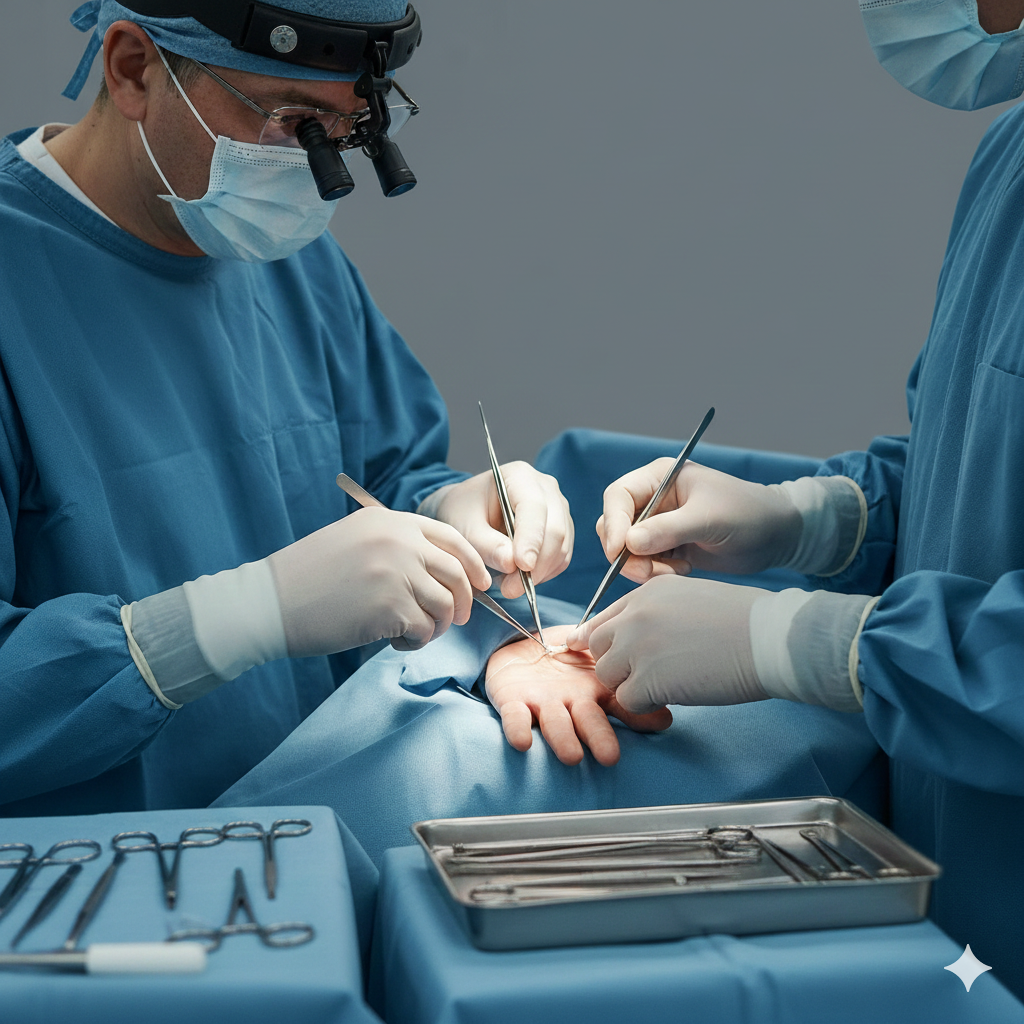
NERVE SURGERY
The nerves in our arms form a complex network that begins in the spinal cord and extends all the way to the fingertips. Because nerves have a very specific physiology, injuries and diseases affecting them require a specialized and careful approach.
The good news is that nerves have a certain ability to regenerate. However, achieving the best possible outcome depends greatly on proper timing and the right treatment strategy.
At Baku Hand & Microsurgery, nerve injuries and nerve-related conditions are treated using modern surgical techniques based on scientific evidence.
Brachial Plexus Injuries
Brachial plexus injuries may occur in children during birth (brachial plexus birth palsy) or in adults as a result of trauma. This condition can lead to significant limitations in arm movement and, in some cases, affect the function of the entire arm.
In such cases, the most important factors are accurate diagnosis, proper timing, and selecting the right treatment strategy. With early and appropriate intervention, the goal is to restore arm function to the best possible level.
Treatment of brachial plexus injuries often requires close cooperation between hand surgery and rehabilitation. With modern surgical techniques and well-planned rehabilitation programs, functional outcomes can be improved in many patients.
Nerve Compression
Nerves extending from the spinal cord to the fingertips may be exposed to compression at different points along the arm. This condition can interfere with the normal function of the nerve and cause various symptoms in the hand and arm.
One of the most common nerve compression conditions is carpal tunnel syndrome, which occurs at the level of the wrist. However, nerve compression is not limited to this area. Nerves can also become compressed at higher levels. For example, compression of nerves at the neck and upper chest region is known as thoracic outlet syndrome.
Patients usually present with symptoms such as numbness and tingling in the hands, dropping objects, decreased strength, and waking up at night due to discomfort.
In such cases, the most important step is accurate diagnosis and choosing the appropriate treatment plan. When necessary, surgical treatment is performed using modern and precise techniques. The goal is to relieve pressure on the nerve and restore function.
In most cases, patients are able to return to their daily activities and professional life within a relatively short period of time.
Additional Note
Due to the successful outcomes and accumulated experience in the treatment of upper extremity nerve pathologies, attention has increasingly turned to hand surgeons when dealing with nerve compressions and other peripheral nerve conditions in the lower extremities as well.
For this reason, a new subspecialty known as “peripheral nerve surgery” has been developing worldwide in recent years. The pioneers of this field are primarily hand surgeons.
This is because hand surgery does not only deal with bones and tendons. It also involves deep specialization in the anatomy and pathology of the peripheral nervous system.
In other words, a hand surgeon is not only an orthoplastic surgeon, but also a peripheral nerve surgeon.
Nerve Tumors
Just like in other tissues of the body, tumors can also develop in nerves. Although this may sound alarming at first, the good news is that most nerve tumors are benign.
In many cases, the tumor can be completely removed with a single surgical procedure. With modern microsurgical techniques, the main goal during surgery is to remove the tumor while preserving the healthy nerve tissue as much as possible.
With careful planning and a microsurgical approach, nerve function can often be preserved, allowing patients to return to their daily activities within a short period of time.
Nerve Injuries
In daily life or as a result of work-related accidents, nerve injuries may sometimes occur. These injuries can lead to muscle paralysis in some cases, while in others they may cause loss of sensation.
After certain nerve injuries, a painful growth known as a neuroma may develop in the injured area. This condition can cause persistent pain and discomfort for patients.
Fortunately, nerves have a certain ability to regenerate and heal. Otherwise, a field such as nerve surgery would not exist.
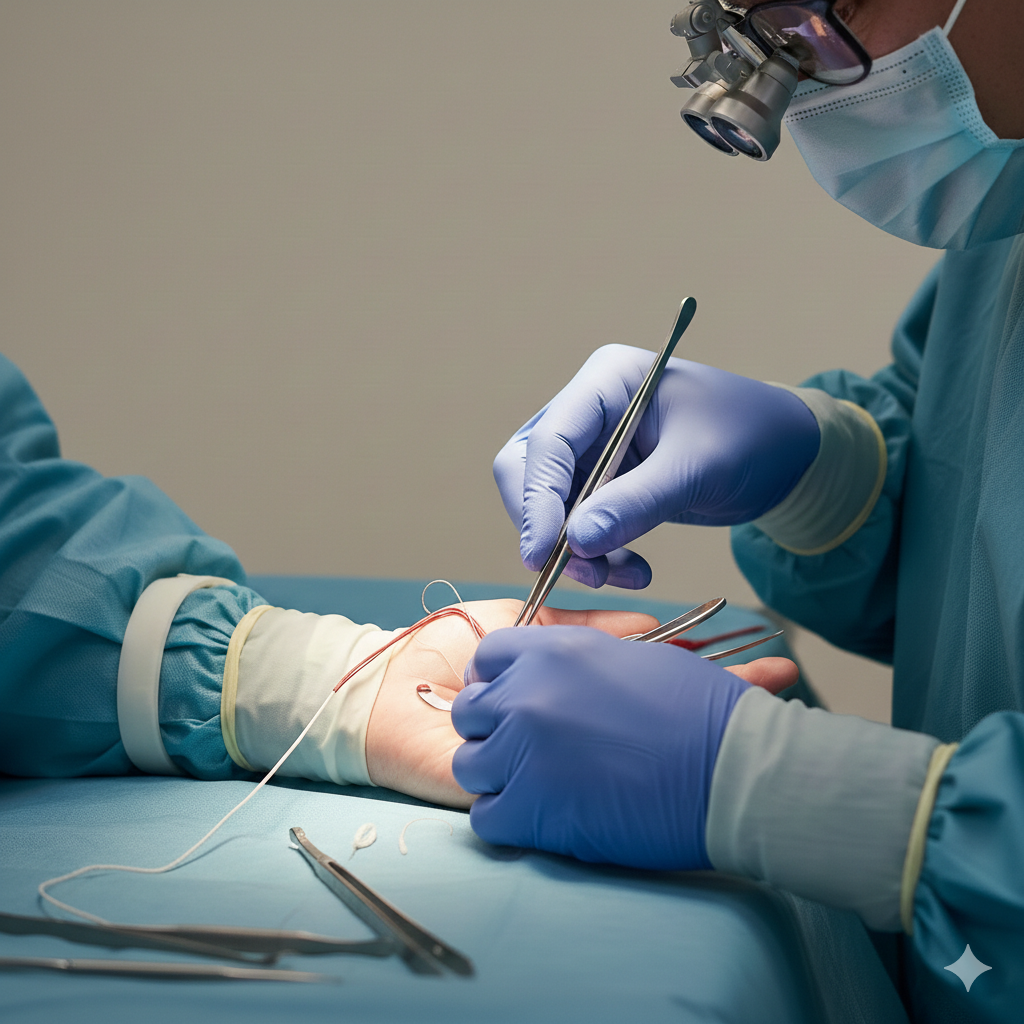
However, nerve operations are very delicate procedures that require high precision and specialized expertise. There are specific standards and technical details that must be carefully followed. Specialists who are trained in these standards include hand surgeons and neurosurgeons specialized in peripheral nerve surgery.
Nerve Transfers
Nerve transfer procedures are performed when the main nerve cannot recover or when long-standing paralysis threatens the function of the muscles.
This technique is widely used, especially in brachial plexus injuries and ulnar nerve injuries around the elbow. During the procedure, a healthy nerve is redirected to the injured area to create a new nerve connection.
One of the advantages of nerve transfer surgery is that it has minimal impact on the donor area, while allowing the paralyzed muscles to regain function.
In recent years, nerve transfer procedures have been used not only for paralysis but also in the treatment of certain spastic conditions.